
Video Teaching's Definition and Characteristics
Video Teaching's Application in Restaurant and Hospitality Management
The Role of Video Teaching in Enhancing Management Skills
The Future Trends and Challenges of Video Teaching
Video Teaching's Definition and Characteristics
Video Teaching is a modern educational method that combines technology with traditional teaching to deliver knowledge in an interactive and engaging manner. It uses digital tools such as投影设备、网络和视频平台,将抽象的概念转化为直观的展示,使观众更容易理解和掌握知识. Video Teaching's key characteristics include its flexibility, real-time nature, and ability to cater to individual learning preferences.
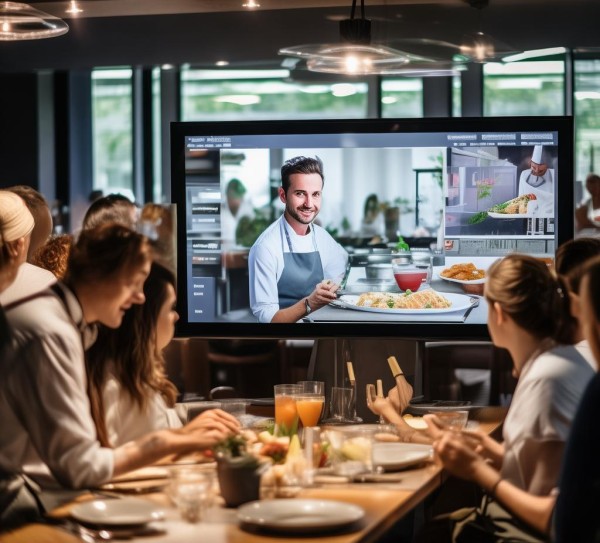
In the context of酒店餐饮管理, Video Teaching serves as an essential tool for imparting comprehensive knowledge across various management areas such as operations, finance, and human resource management. By utilizing Video Teaching, managers can gain a deeper understanding of intricate concepts and enhance their practical skills, ultimately contributing to the operational efficiency of the business.
Video Teaching's Application in Restaurant and Hospitality Management
Video Teaching Technology is increasingly being adopted in the hospitality industry, including酒店餐饮管理, to facilitate both in-person and online learning. Below are some specific applications:
1. **Course Design and Content Development**: Video Teaching enables the creation of engaging and informative courses that can be presented in an interactive format. This approach helps students grasp complex concepts through visual aids, images, and animations, making learning more effective and enjoyable.
2. **Distance Learning**: With the rise of online platforms, Video Teaching is being adapted for distance learning scenarios. This allows students to access educational content from anywhere, ensuring that remote learners can benefit from high-quality training without compromising on quality.
3. **Real-Time Data ysis**: Video Teaching systems can yze real-time data to provide actionable insights. For instance, through video ysis, managers can assess customer demand trends, compe activities, and employee performance, enabling them to make informed decisions.
4. **Data ysis and Decision Support**: Video Teaching platforms integrate advanced ytics tools to help managers understand the impact of their decisions. This includes yzing employee performance, workload distribution, and customer feedback, thereby improving operational efficiency and profitability.
These applications demonstrate Video Teaching's versatility across different aspects of hospitality management, making it a valuable tool for both students and professionals.
The Role of Video Teaching in Enhancing Management Skills
Video Teaching plays a pivotal role in enhancing management skills by equipping managers with the necessary knowledge and practical skills they may not acquire through traditional training methods. Below are some key benefits:
1. **Improving Management Efficiency**: Video Teaching enables managers to learn complex concepts like food preparation, inventory management, and customer service in a more interactive and engaging manner. This fosters a deeper understanding of management principles and techniques, thereby improving operational efficiency.
2. **Developing Problem-Solving Skills**: By yzing real-time data and scenarios, managers can develop critical thinking and problem-solving skills. Video Teaching provides a platform for managers to experiment with different solutions and strategies, enhancing their decision-making abilities.
3. **Building a Strong Workforce**: Video Teaching helps create a skilled workforce by providing them with up-to-date knowledge and practical experience. This capability is essential for managers who need to adapt to changing business environments and customer expectations.
Video Teaching thus serves as a cornerstone for a modern management education, enabling managers to stay competitive in the hospitality industry.
The Future Trends and Challenges of Video Teaching
The integration of Video Teaching in hospitality management is opening up new avenues for innovation and growth, but it also presents several challenges that need to be addressed. Below are some emerging trends and associated challenges:
1. **AI and Data-Driven Decision Making**: The use of Artificial Intelligence (AI) and Big Data ytics will significantly enhance the value of Video Teaching by providing real-time insights and predictive ytics. However, integrating AI into Video Teaching systems requires careful planning and technical infrastructure support.
2. **Virtual Reality (VR) and Augmented Reality (AR)**: VR and AR technologies will revolutionize the way Video Teaching is delivered. These technologies will create immersive learning experiences, making the learning process more engaging and effective. However, they also present challenges related to user training and content accessibility for diverse audiences.
3. **Globalization and Cross-Cultural Management**: As the hospitality industry expands internationally, Video Teaching will need to adapt to different cultural contexts. This will require Video Teaching systems to be multilingual and culturally inclusive, ensuring that all learners can access and benefit from the content.
4. **Technological Advancements**: The rapid pace of technological innovation will drive the development of new Video Teaching tools and platforms. This will not only enhance the learning experience but also ensure that Video Teaching remains relevant and effective in a rapidly changing business environment.
Despite these challenges, Video Teaching has the potential to become an integral part of modern hospitality management education. By leveraging technology, managers can enhance their skills, drive innovation, and drive the growth of the hospitality industry.
Video Teaching is a dynamic field that continues to evolve, offering managers a powerful tool for continuous learning and professional development. As technology advances, the future of Video Teaching is bright, with the potential to shape the future of hospitality management in significant ways.
Video Teaching's impact on the hospitality industry cannot be overstated. It not only enhances the management skills of hospitality professionals but also opens up new opportunities for innovation and growth. As Video Teaching continues to evolve, we can expect even more transformative applications in the hospitality industry.